 The Gardener's Log
Autumn Garden Jobs: Before and After
Most of what I write here is advice, but every so often it is worth showing the work itself. These are photos from a run of recent autumn jobs, with the before on the left and the after on the right. For each one I have added the tips I would give anyone tackling the same thing in their own garden.
Wisteria: pruning back to the framework
Three of these jobs were wisteria, which is no surprise. It is a beautiful plant, but left alone it puts out long whippy shoots all summer and can swallow a wall, a gutter or a roof in a couple of seasons.
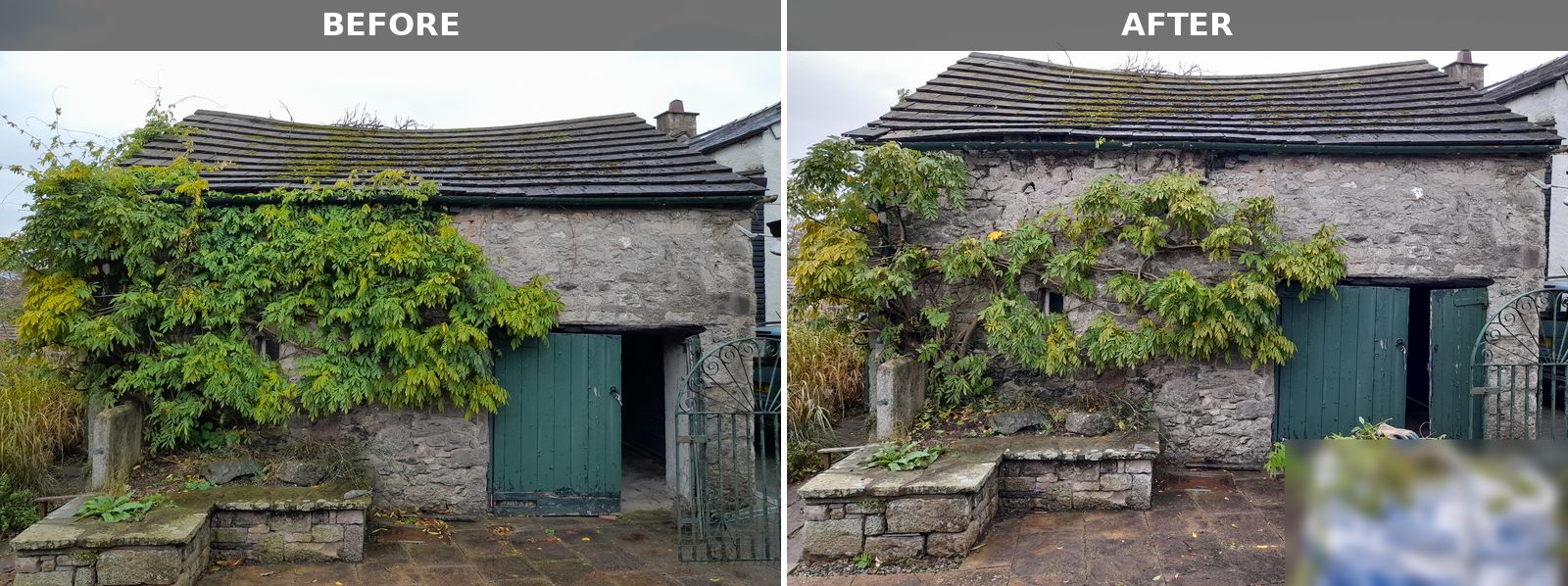
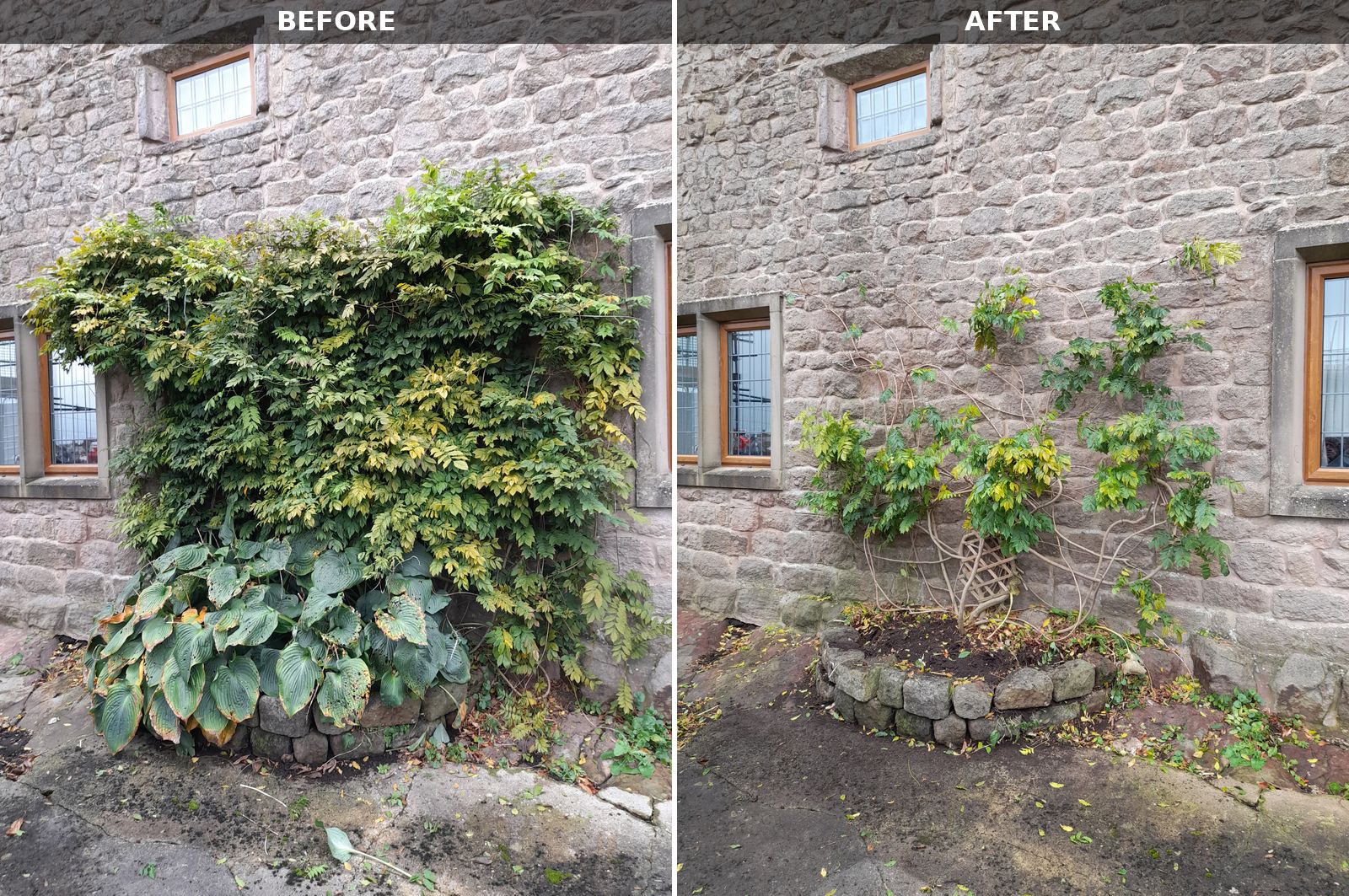
Wisteria is pruned twice a year, and the two cuts do different jobs:
- Summer (July to August): cut the long green shoots back to about five or six leaves from the main stems. This keeps the plant under control and lets light and air reach the wood that will flower.
- Winter (January to February): once the leaves are off and you can see the structure, shorten those same shoots again to two or three buds. The fat, rounded buds are flower buds, and the slim, pointed ones are leaf buds, so you can see what you are keeping.
An autumn tidy like these, done before the plant gets into gutters, roof tiles and window frames, is about getting it back under control. Then the winter prune can concentrate on flowers. Keep a few strong stems tied in as the permanent framework. Never let wisteria twine round drainpipes, because it will crush them.
Cutting back overgrown climbers
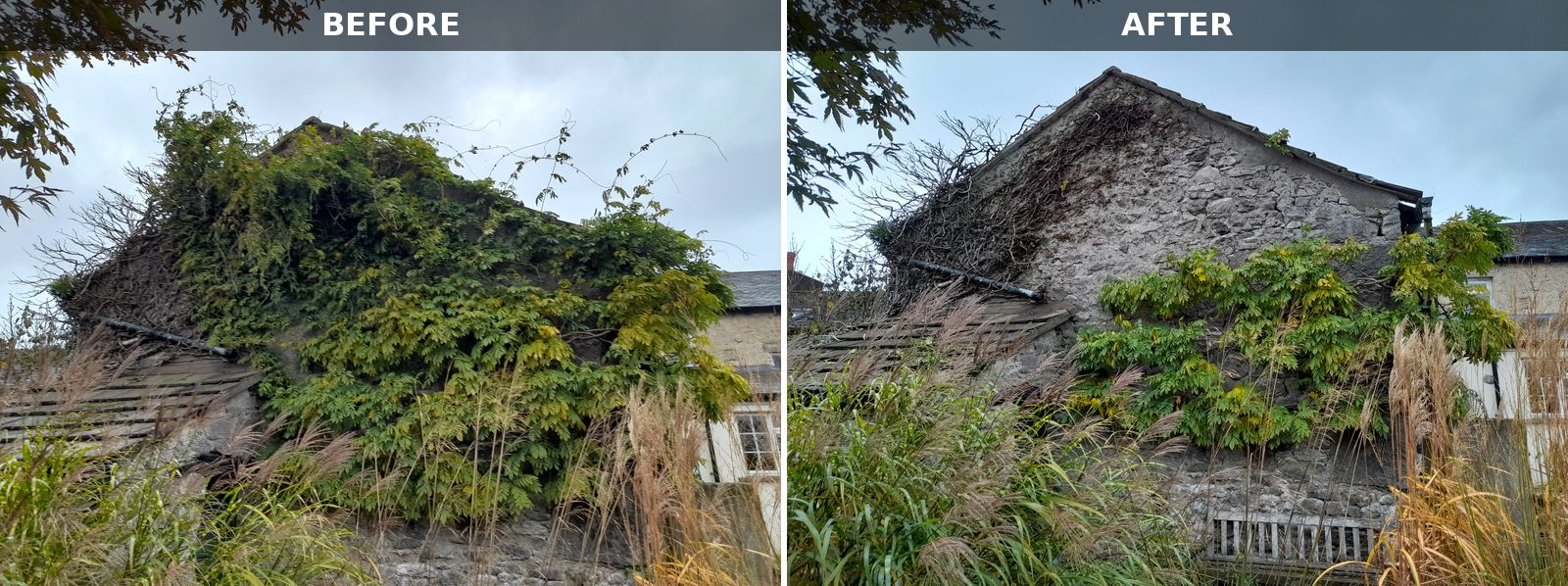
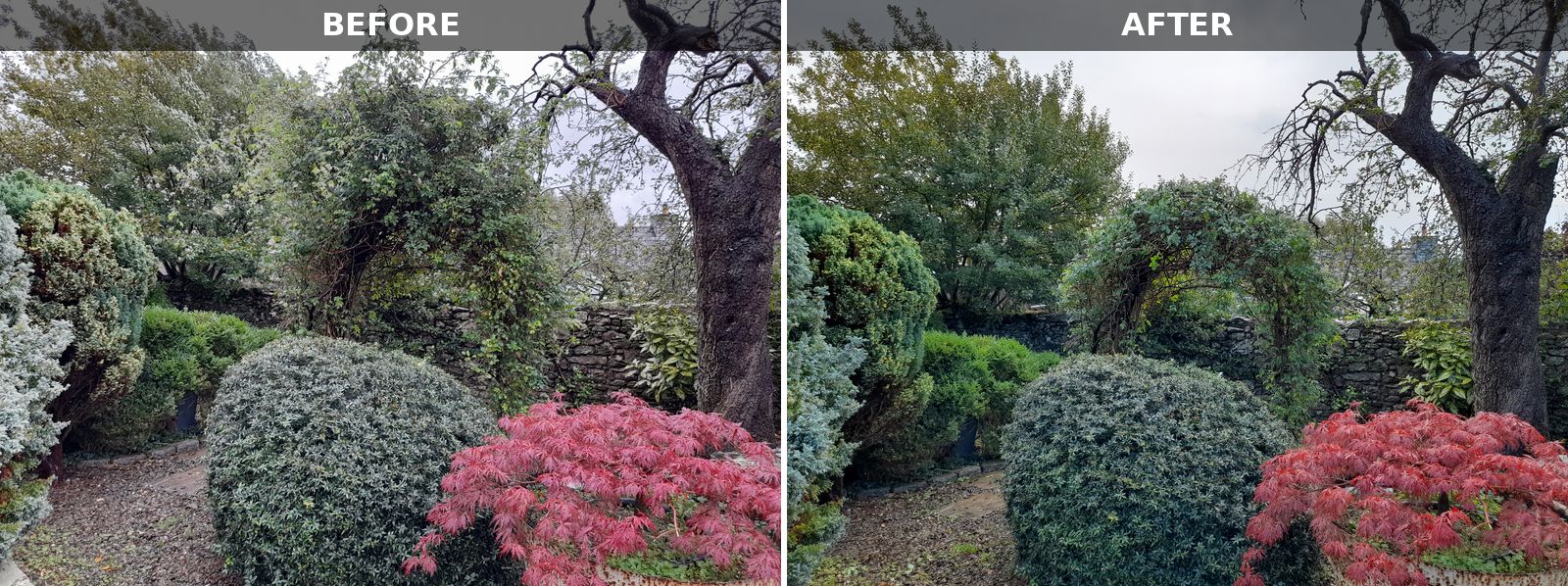
With anything that has grown over a roof or arch, I work from the outside in. Take off the long loose growth first, so you can see what is holding the plant up. Then work back towards the main stems. Pull growth away from tiles and gutters carefully rather than yanking it, because tendrils and stems can lift slates and loosen pointing. Find out what the climber is before cutting hard too, because some flower on last year's wood and you can lose a season of flowers. On an arch, aim for an even shape a hand's width or so proud of the frame, so it looks full but still lets you walk through.
Potting up a Japanese maple
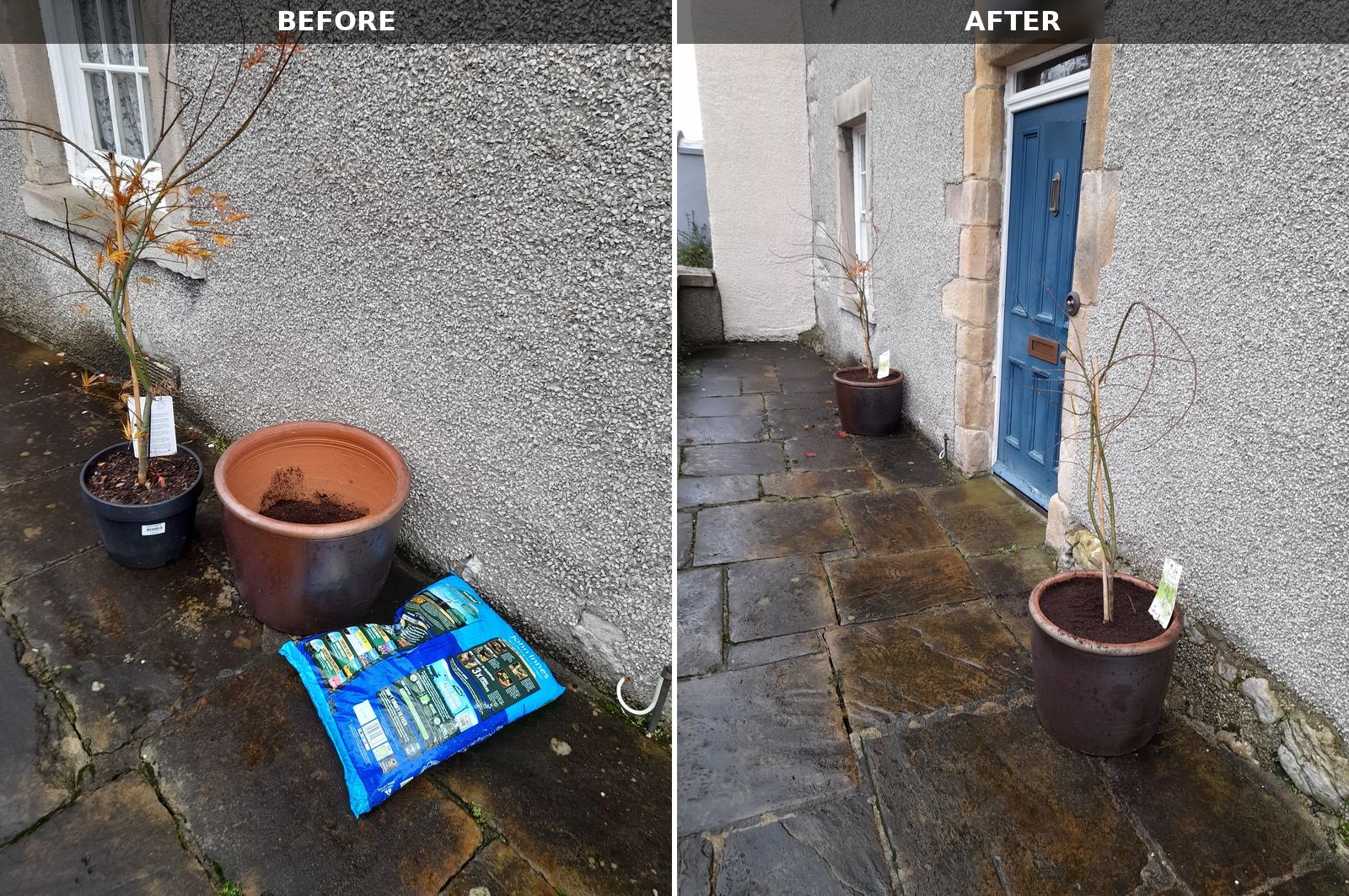
Japanese maples are one of the best trees for a pot, and autumn is a good time to plant them while the soil is still warm. A few things make the difference:
- Pick a pot only a little bigger than the root ball, with a drainage hole. A huge pot holds too much wet compost over winter.
- Use a loam-based compost such as John Innes No. 2 or 3. It holds its structure for years and stops a tall pot blowing over. Some people use an ericaceous mix, but acers are not fussy as long as it drains.
- Plant at the same depth it sat in the nursery pot and firm gently. Water well, then let it drain.
- Keep them out of strong wind and hot afternoon sun, which scorch the leaves. A sheltered front door like this suits them well.
Raise the pots on feet for winter. My post on overwintering pots and containers has more.
Clearing patios and paths
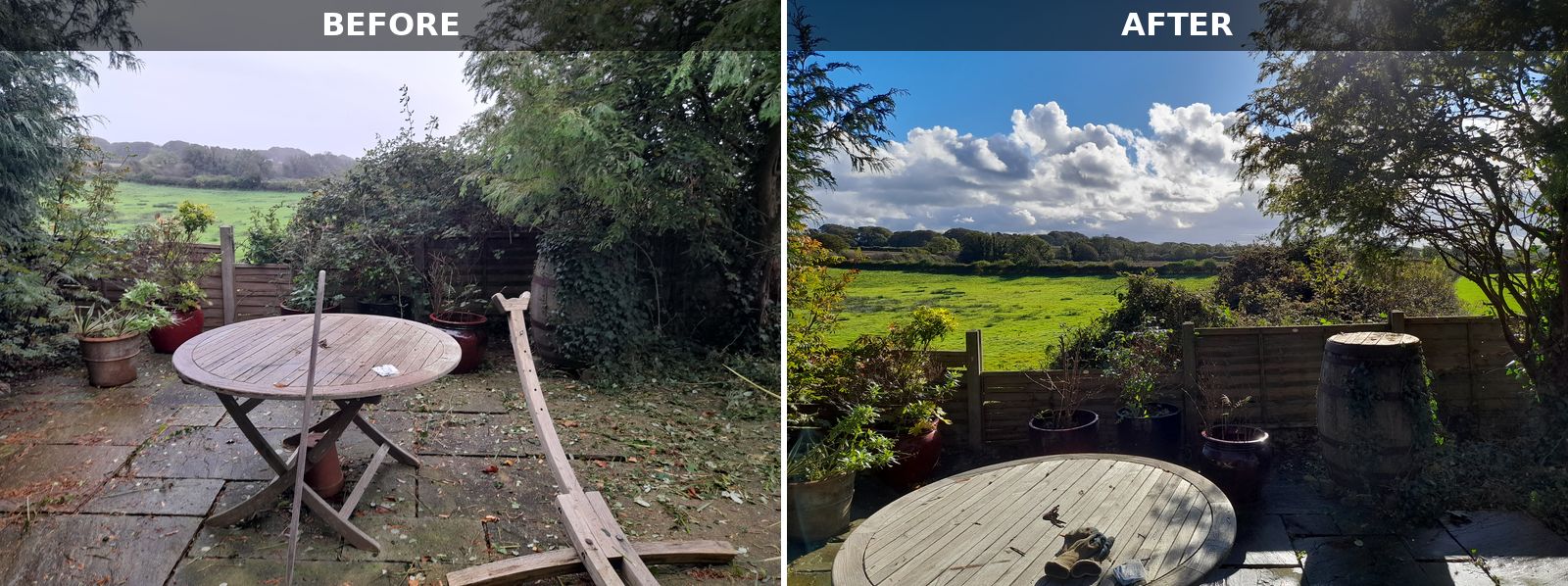
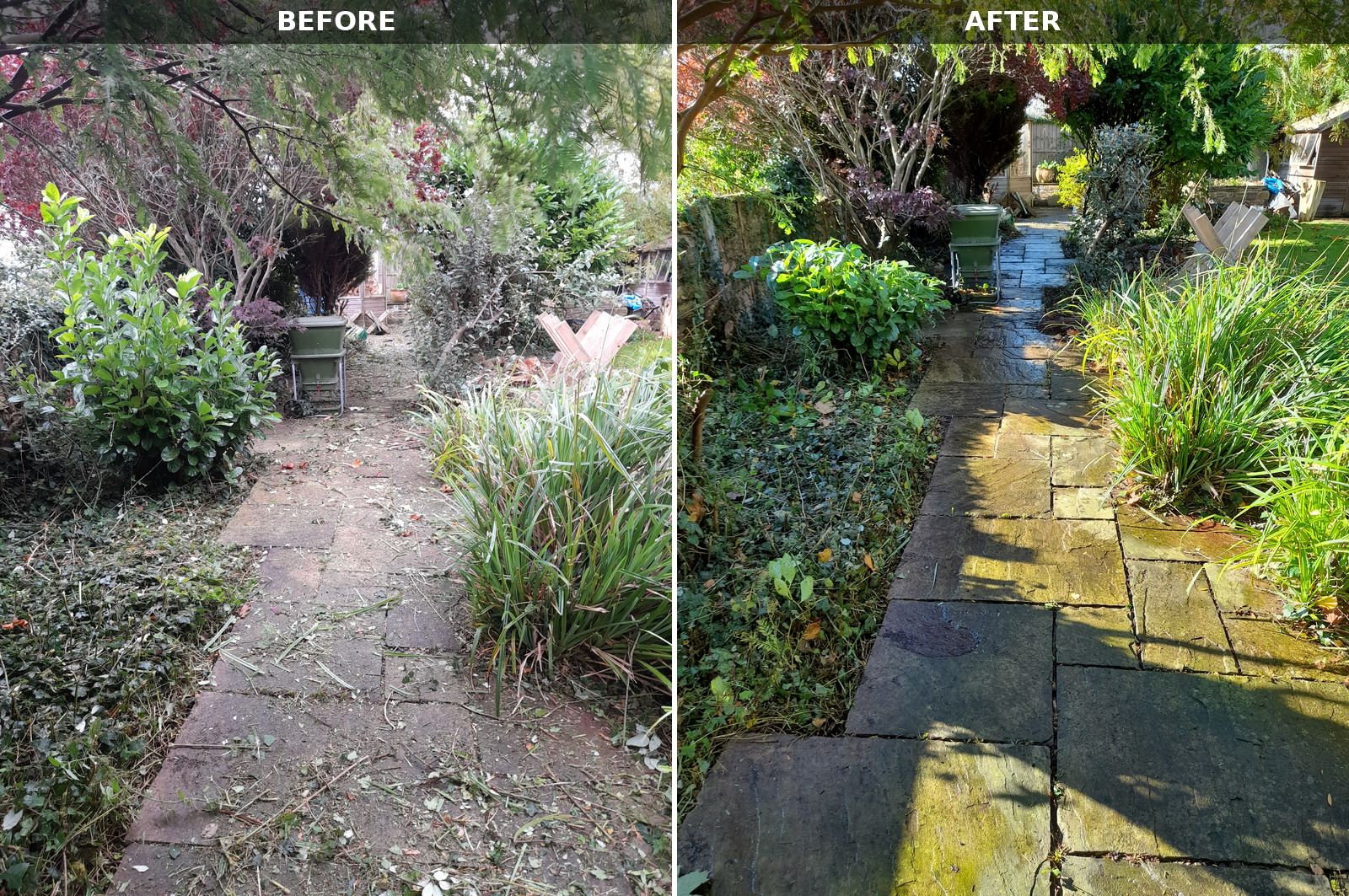
The clearing at the end of a job matters as much as the cutting. Wet leaves and clippings left on stone are slippery and stain it. Rake or sweep the big stuff first, then go over the joints with a stiff brush. If the stone is green underneath, a gentle clean on a dry day will sort it. See jet washing a patio safely before you reach for the pressure washer. Most of the green waste can go on the compost heap or into the council brown bin, as long as it is not diseased. My guide to clearing leaves covers what to do with the rest.
A new inspection chamber cover
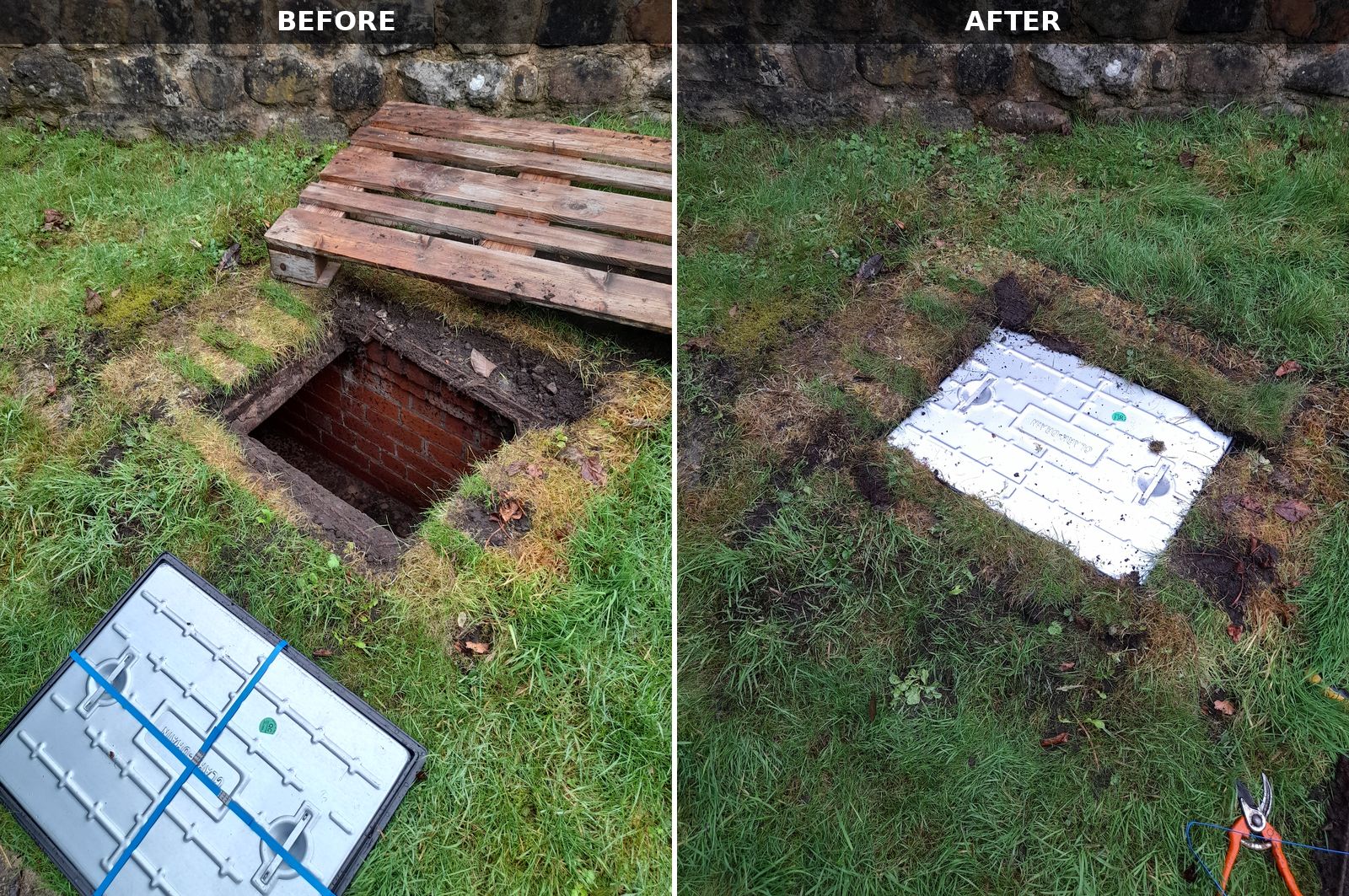
A small job, but a worthwhile one. A rotten or missing cover is a real trip and fall hazard. When you replace one, buy a cover rated for what will go over it, as covers for foot traffic only are not built to take a car. Set it flush with the turf so the mower runs over it, and never bury it, because you will want access to the drain one day.
A eucalyptus taken down
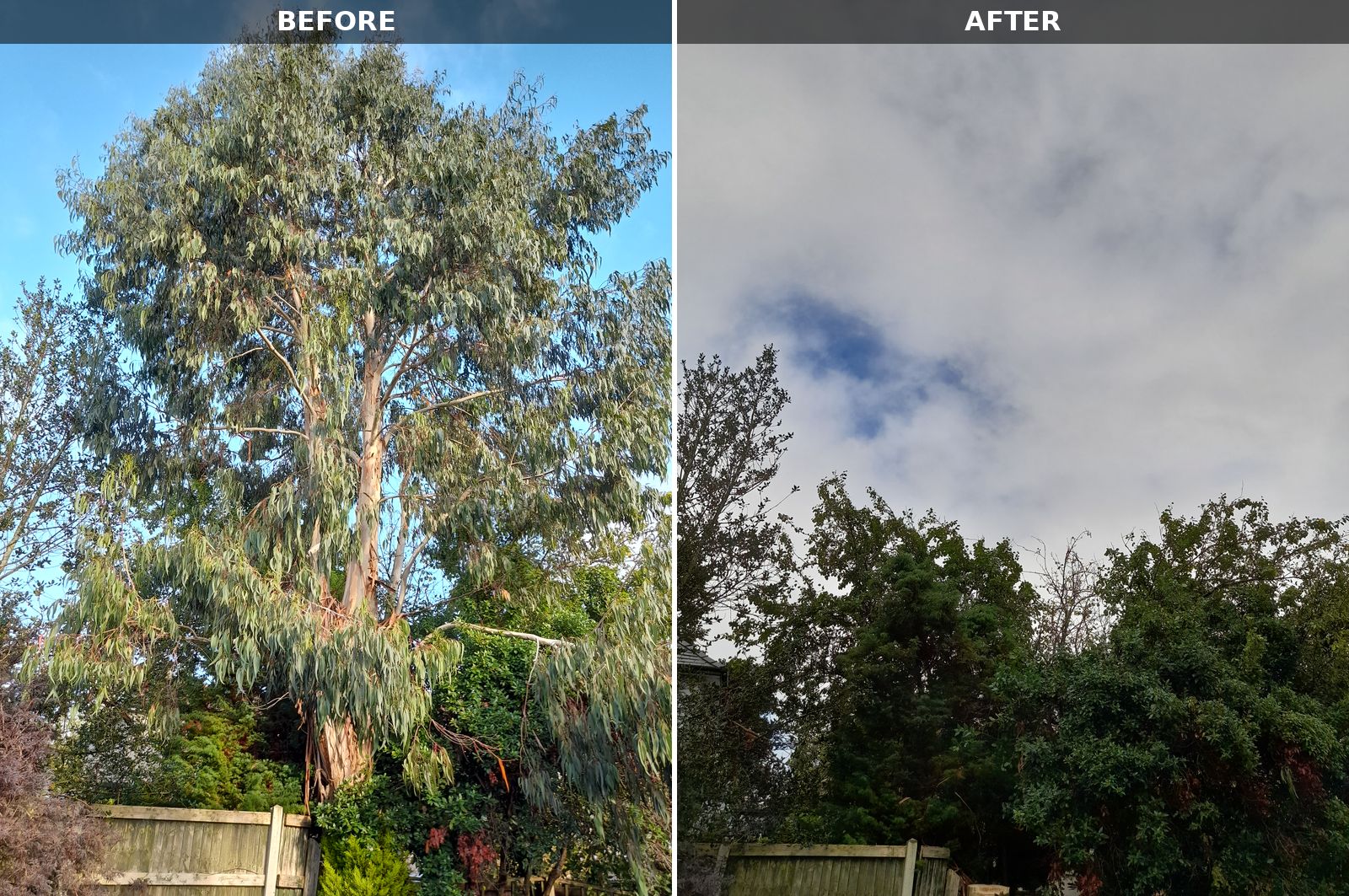
Eucalyptus grows far faster and taller than most people expect when they plant a small one. A tree this size is not a DIY job. Felling anything big needs a qualified, insured tree surgeon with the right kit. Before any work on a large tree, check with your council whether it has a Tree Preservation Order or stands in a conservation area, as you may need consent or have to give notice first. My post on pruning small trees covers the rules in more detail.
For autumn colour: the beautyberry
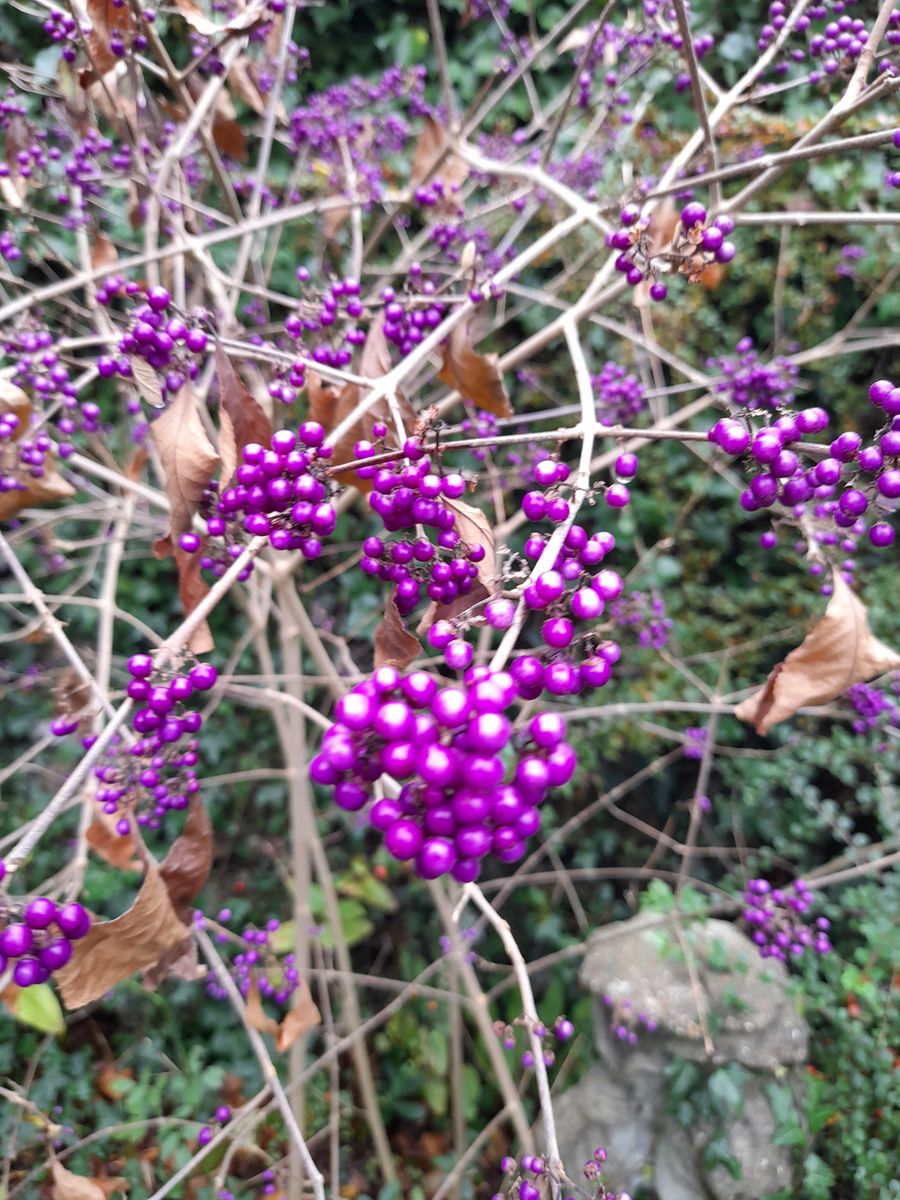
Not a job, but this shrub stopped me in my tracks. Callicarpa, or beautyberry, is fairly ordinary all summer. Then, as the leaves drop in autumn, it is covered in clusters of glossy violet berries that last well into winter.
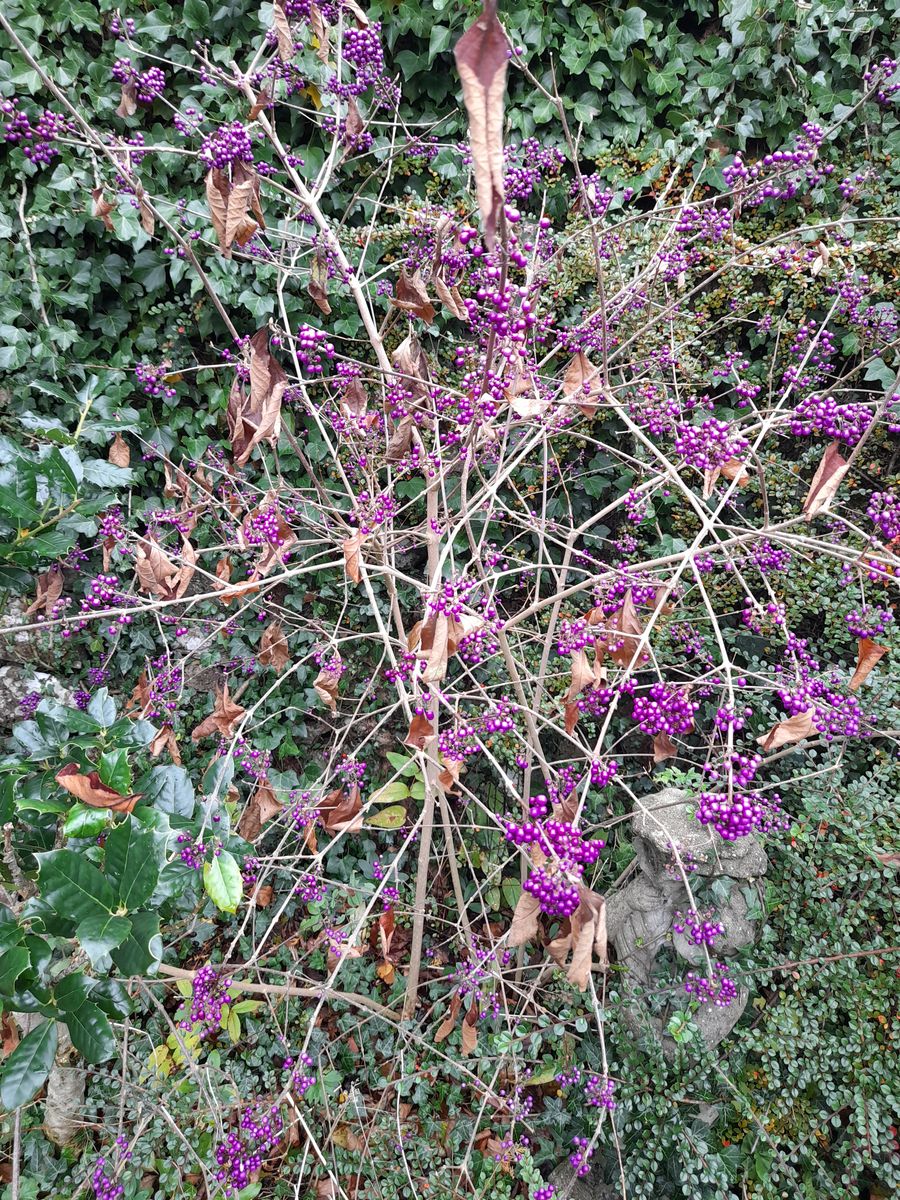
It is hardy, easy in most soils, and berries best in sun. Plant it where you will walk past it in November. Pruning is simple: in early spring, take out a few of the oldest stems at the base and shorten any that spoil the shape. Hard pruning loses the berries for a year.